English editorial overview · Updated 20 November 2026
By Luís Valente. This English page is a concise editorial adaptation of the subject, rather than a line-by-line translation of the longer Portuguese article.
Understanding the subject
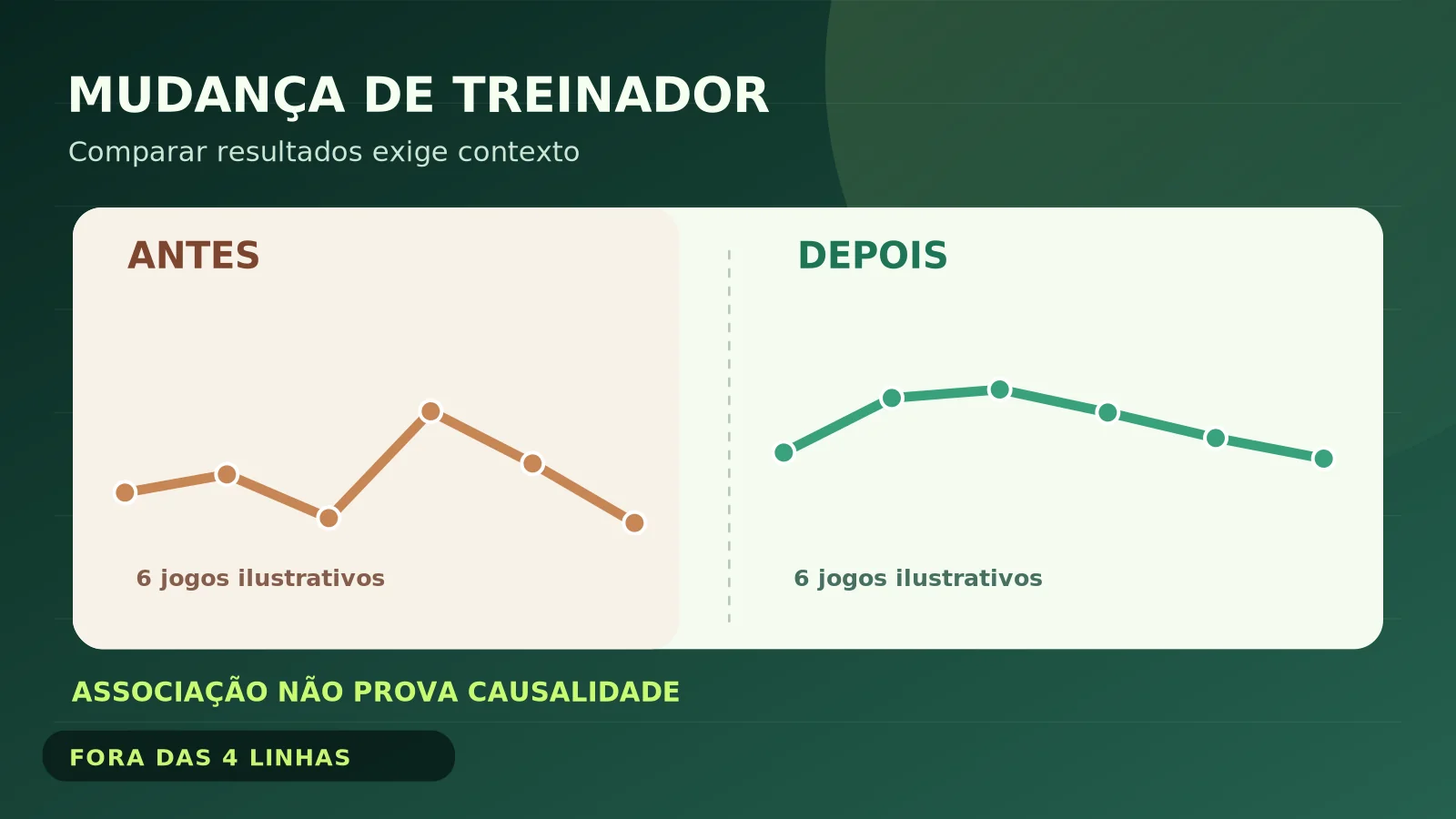
A run of poor results is often followed by a managerial change. But an improvement afterwards does not prove that the change caused it: regression to the mean, fixtures and squad factors can matter.
Football numbers need a defined sample, a reliable source and an explanation of how they were calculated. One isolated measure can be misleading, especially when team quality, opponents and game state vary.
What this article helps you explore
- The difference between correlation and causation.
- The significance of a Portuguese case study.
- What broader European comparisons reveal and cannot prove.
Reading football with context
To compare teams or performances fairly, first identify the competition and period covered by each number. Look for information on the opponent, the match situation and the source of each statistic. Hypothetical calculations should never be described as real outcomes.
Editorial selections and comparisons depend on their criteria. Where figures or claims matter, consult the detailed Portuguese edition for references, dates and additional explanations before making further use of the information.